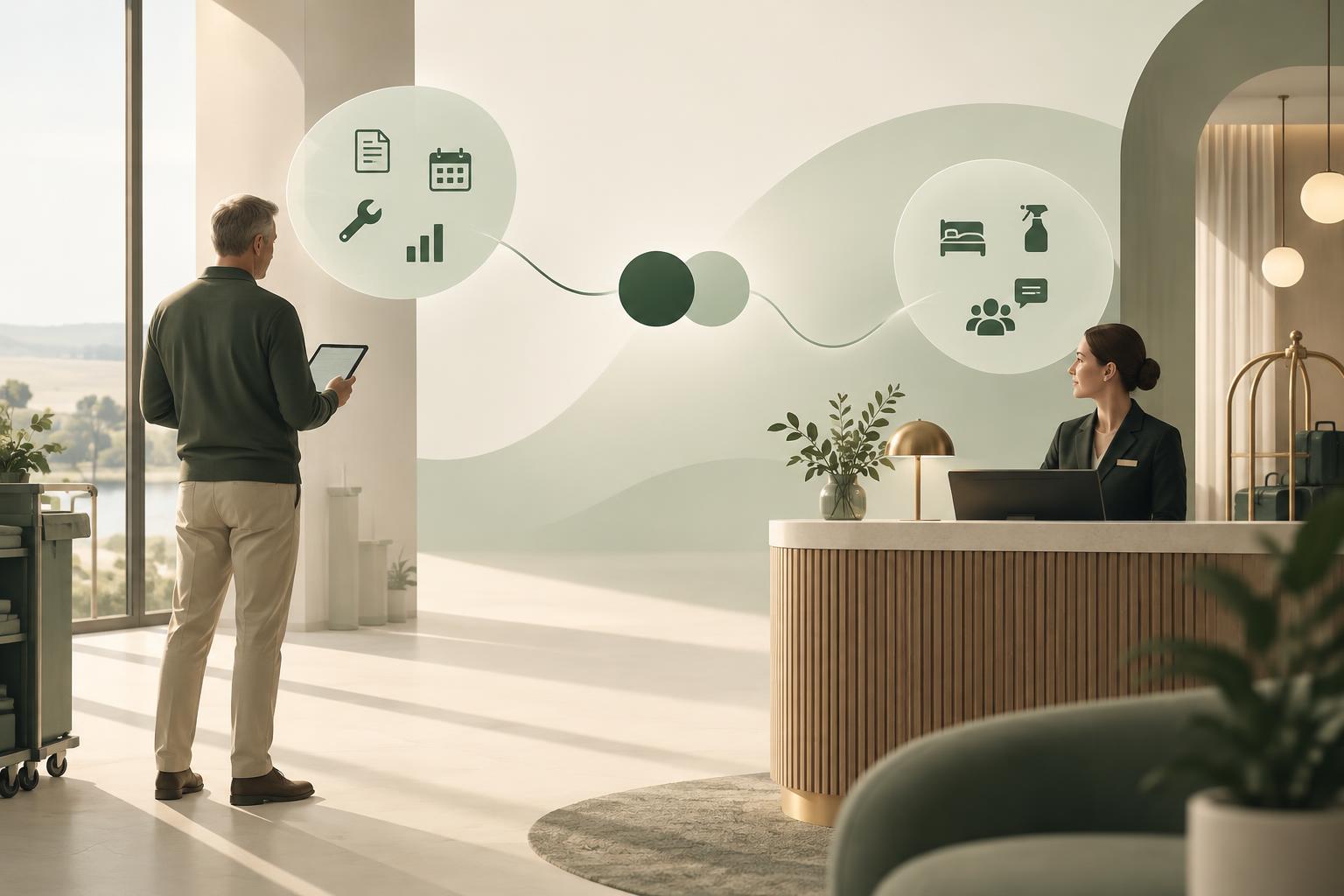
Earlier this week, my facilities manager wanted to take an AI course with me to make his working day easier. It turned into a conversation about documents, maintenance and fault reports. But above all, about how we can make it easier for our colleagues to give guests good service.
A facilities manager has a huge amount of information to keep track of: service contracts, care instructions, budgets and maintenance plans. At our hotel, with its 219 rooms, there are also overviews and documentation for every room. Add to that fault reports from across the property and all the important dates to remember.
At the same time, we are a service business. Reception is often the first to hear that something is not working, and some problems need to be solved here and now. Guests need help even when the facilities manager is not on site.
Needs first, tools second
We started by talking about his needs and what he wanted to achieve. He wanted his own assistant to help him find and work with the information in all his files. But he also wanted to give reception an assistant they could ask when something was wrong in a room: What can we do ourselves, and how do we look after the guest in the meantime?
I went through the AI features the company has selected. Then I mapped out a way of working to make the solution sustainable over time.
The foundation was to organise the information. With Gemini Notebook, we started with a structure similar to the one he already had on his Drive, with areas such as fire safety, contracts, maintenance and manuals. Each area had its relevant files.
We also brought together common faults, solutions and advice on compensation in an FAQ. The idea behind the structure was to make the information easier to maintain and the setup possible to build on. It would also determine which information each assistant could access.
Two assistants with different roles
Next, we created a Gemini Gem that we called Fastighetsassistenten. We gave it a clear role and working instructions, drawing on all the information areas from the first step. This became the facilities manager’s own assistant.
Then we created another Gemini Gem: Fastighetscoachen. This one had a different role – to guide hotel colleagues clearly, step by step. For this, we selected a more limited set of source material: frequently asked questions and answers, manuals and room overviews. We then shared it with reception.
The same business, but two different needs. The facilities manager needs an overview and support with planning. Reception needs practical advice in the moment to help the guest.
From information to everyday support
My facilities manager now has a setup intended to support him in drawing up maintenance plans and finding important dates in contracts. The aim is also to provide support with service reminders and a link to his calendar.
Reception, in turn, now has an assistant to ask for advice when a guest reports a problem and the facilities manager is not on site. The goal is fewer emails and calls, but above all better service, with more problems resolved straight away.
Now my facilities manager gets support with day-to-day leadership, and my reception team gets support to make guests happier. Win-win
For me, this is a concrete example of why AI is not primarily a technology issue, but a leadership issue. We did not start by choosing a feature. We started by understanding the day-to-day work, distinguishing between the needs and giving the assistants clear roles. That is where the opportunity to make a real difference lies.